Coastal vs. Central Camino Portugués: Which Route Is Right for You?
By Claire, Camino Pilgrim Co-Founder
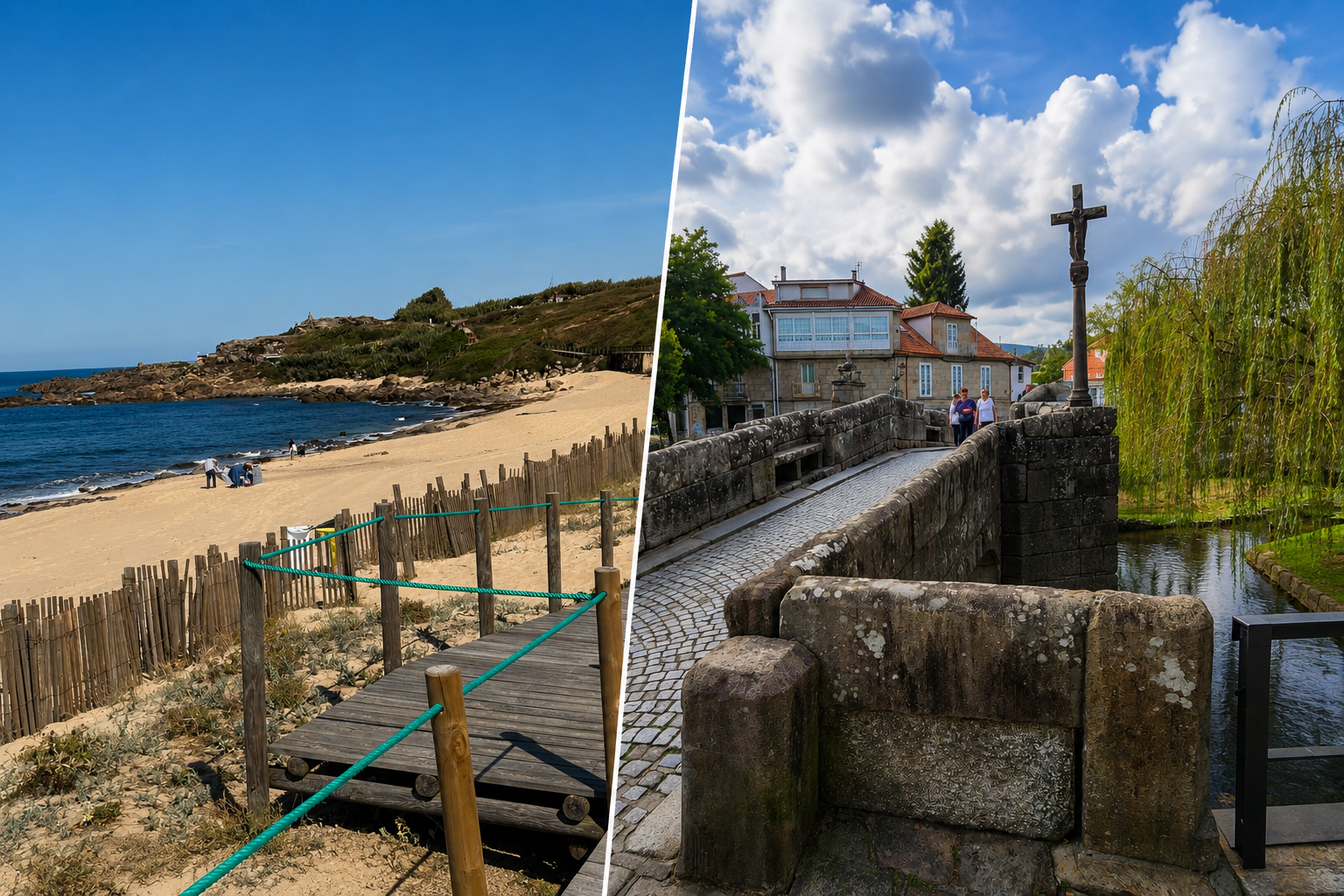
So you've decided to walk the Camino Portugués. Wonderful choice. But now you're facing one of the first decisions every pilgrim has to make: do you walk the coastal route or the central route?
It's a question we get asked all the time and honestly, there's no wrong answer. Both routes are beautiful, meaningful, and will get you to Santiago de Compostela with a full heart and (very) tired legs. But they offer quite different experiences along the way. Here's what you need to know to choose the one that's right for you.
The Central Route: The Classic Camino Portugués
The central route is the original, the one most pilgrims mean when they say they're walking the Camino Portugués. It starts in Porto, heads north through the Portuguese countryside, and crosses into Spain at Valença before continuing through Tui and onward to Santiago.
What it looks like: Rolling green hills, cobblestoned town centres, vineyards, eucalyptus forests, and a steady rhythm of small villages. It's quieter and more rural than the famous Camino Francés, but well-marked and generally well-supported with cafés, albergues, and pilgrim infrastructure.
Highlights along the way include:
The medieval city of Porto, where your journey begins
Barcelos, a charming market town famous for the legendary Galo de Barcelos (the iconic Portuguese rooster)
Ponte de Lima, one of the oldest towns in Portugal, with its beautiful Roman bridge
The fortress town of Valença, perched above the Minho River with sweeping views into Spain
The handsome Parador de Tui — a stunning place to spend your first night in Spain
This route suits you if:
You love the feeling of walking through living, breathing Portuguese and Galician culture
You prefer well-marked paths with lots of pilgrim company
You want a reliable rhythm of towns and services each day
This is your first Camino and you'd like a more structured experience
The Coastal Route: The Scenic Litoral
The coastal route (also known as the litoral) is the newer star of the Camino Portugués world, and it's been winning hearts ever since it was fully waymarked. It hugs the Atlantic coastline north of Porto, passing through fishing villages, over boardwalks, across wide sandy beaches, and through the kind of scenery that stops you in your tracks mid-stride.
What it looks like: Ocean views, sea air, salt marshes, dramatic cliffs, and little harbourside towns where the fish and seafood is fresh off the boat. It's more physically varied than the central route, some sections are on hard boardwalk or sand rather than soft trail, but the scenery more than makes up for it.
Highlights along the way include:
Matosinhos, just north of Porto, with its famous seafood restaurants right on the harbour
Vila do Conde and its impressive aqueduct
Viana do Castelo, arguably the most beautiful town on the entire route, with its hilltop basilica and stunning main square
Caminha, the last stop before crossing into Spain. Take the ferry across the Minho River for one of the most memorable moments of the whole journey
Baiona, on the Spanish side, a charming coastal town with a beautiful historic Parador
This route suits you if:
Ocean views and coastal scenery are high on your list
You love the idea of fresh seafood, fishing villages, and that Atlantic salt air
You're happy with slightly more variable terrain underfoot
You want something a little less-travelled and more dramatic
Can You Walk Both?
Yes — and this is actually our favourite approach for first-time pilgrims. Many walkers choose to combine the best of both routes: walking the coastal Portuguese route through some of the most scenic sections in Portugal, then joining the central route in Portugal or in Spain to walk the classic final stages into Santiago.
This blend gives you the wow-factor of the Atlantic coast and the timeless Camino atmosphere of the authentic Portugal and Galician interior. It also lets you visit standout towns on both routes, rather than having to choose between them.
What About the Distance?
Both routes comfortably cover the official 100km minimum required to earn your Compostela certificate, and if you're walking all the way from Porto to Santiago, you'll be walking considerably more than that (typically 230–260km depending on your exact route). We generally plan for daily distances of around 20–25km, which is very achievable for walkers of moderate fitness with a few months of preparation.
Not Sure? That's What We're Here For
Choosing a route is just one of the many decisions that go into planning a Camino — and it's the kind of thing that's much easier to work through with someone who's walked it.
At Camino Pilgrim, we plan small-group guided journeys and self-guided journeys along the Camino Portugués for people who want the full experience without the full stress of logistics and planning. We take care of accommodation, luggage transfers, route planning, and all the details in between, so you can focus entirely on the walk.
Browse our Camino Portugués trips at camino-pilgrim.com and find the journey that calls to you or reach out for a free initial discovery call — we'd love to help you figure out which route is the right fit.
Bom Camino!
Camino Pilgrim offers specialist small-group guided walking journeys and self-guided journeys along the Camino Portugués. Based in Portugal, we specialise in thoughtfully planned trips for travellers who want to walk with confidence and come home changed.